Indian Classical Music is one of the richest and oldest musical traditions in the world. Deeply rooted in emotion, spirituality, and discipline, it has shaped countless legendary singers and continues to influence modern music across India. Whether you’re a beginner wanting to improve your voice or a parent searching for the right academy for your child, learning Indian Classical Singing lays the strongest foundation for lifelong musical growth.
At Aarambh Music & Dance Academy, our Vocal Guru trains students with structured techniques, personalized guidance, and real performance exposure. In this blog, you’ll learn how to start Indian Classical Vocal training, why it’s important, and how a video performance by our Vocal Guru can inspire and guide your learning journey.
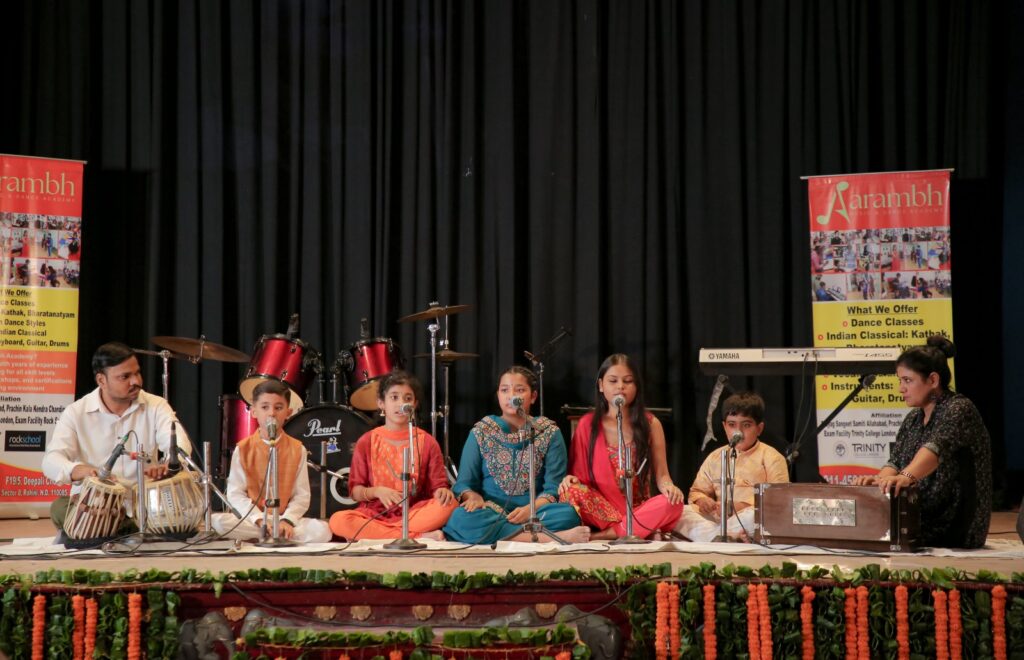
What Makes Indian Classical Singing Special?
Indian Classical (Hindustani) Vocal Music is not just about singing—it is about developing voice culture, understanding rhythm, feeling emotions, and expressing a story through music.
It helps learners:
- Strengthen voice control
- Increase vocal range
- Improve breath management
- Understand ragas deeply
- Build confidence for stage performances
This is why classical music is considered the backbone of every form of singing—Bollywood, semi-classical, ghazals, bhajans, folk, or even modern fusion.
Start Your Journey With Inspiration – Watch Our Vocal Guru’s Performance
Before learning any art form, inspiration plays a big role. A real performance helps beginners understand the beauty, grace, and depth of Indian Classical Music.
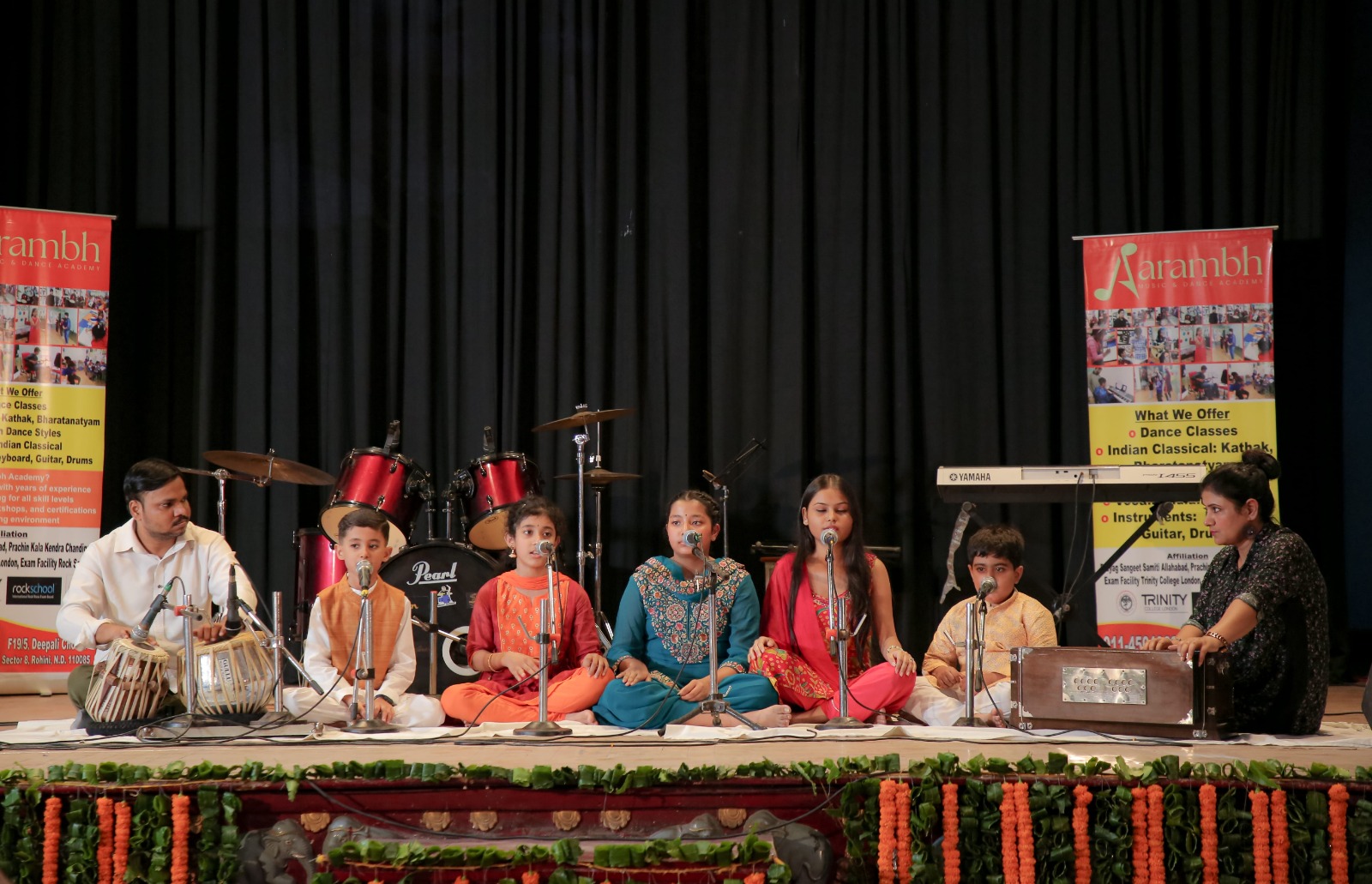
“Watch this soulful Indian Classical Vocal performance by our Vocal Guru at Aarambh Music & Dance Academy.”
✔ Why this video is important for your learning:
- You observe correct pronunciation of swaras
- You see how a raga is developed
- You hear how voice modulation is done
- You understand the emotional depth behind classical singing
- You get motivated to practice consistently
This video becomes a reference point for students throughout their learning journey.
What Do You Learn in Indian Classical Vocal Training?
At Aarambh Academy, we follow a progressive and structured curriculum for all age groups.
1. Swaras & Alankars
The first step is to build pitch perfection.
Students learn:
- Sa Re Ga Ma Pa Dha Ni
- Alankars (patterns that strengthen control)
- Ear training for accuracy
2. Voice Culture & Breath Control
A strong and steady voice is developed through:
- Breathing exercises
- Sustaining notes
- Voice opening techniques
- Resonance training
3. Raga Training
Students begin learning ragas slowly:
- Understanding mood & time of raga
- Building aalap
- Singing bandish / compositions
- Improving improvisation skills
4. Rhythm (Taal) Knowledge
Taal is the backbone of Indian music.
Learners get trained in:
- Teentaal
- Keharwa
- Dadra
- Jhaptal
and more.
5. Performance Preparation
Students are encouraged to perform:
- At academy events
- Cultural festivals
- Competitions
- Stage shows and recordings
This builds confidence and stage presence.
Why You Should Learn Indian Classical Singing
Indian Classical Vocal offers benefits far beyond music:
✔ Enhances Memory & Concentration
Perfect for school-going children and students preparing for competitive exams.
✔ Builds Confidence & Discipline
Regular practice brings mental strength and emotional balance.
✔ Improves Voice Quality
Even film singers like Shreya Ghoshal, Arijit Singh, Sonu Nigam, and Shankar Mahadevan started with classical training.
✔ Helps in Any Style of Music
Once the basics are strong, students can sing:
- Bollywood
- Devotional
- Light music
- Ghazals
- Fusion
- Folk
✔ Lifelong Skill
You can start at any age—6 or 60. All you need is consistency and passion.
How to Use the Vocal Guru’s Video While Learning
Here’s how students can use the performance video to improve faster:
1. Observe How Notes Are Held
Notice how smoothly each swar transitions.
Try to replicate slowly at home.
2. Watch Jaw, Lip & Breathing Movements
This helps in understanding professional singing techniques.
3. Learn the Emotion Behind the Raga
Indian Classical Music is not mechanical—it’s expressive.
4. Practice Along
Pause the video to practice swaras or aalap sections.
5. Set Goals
Each week, aim to reach a small milestone inspired by the performance.
With this video embedded in the blog, visitors not only enjoy the performance but also get motivated to learn.
Why Learn at Aarambh Music & Dance Academy?
✔ Experienced Vocal Guru
Trained, patient, and passionate about classical teaching.
✔ Small Batches for Personal Attention
Every student gets individual guidance.
✔ Performance Opportunities
We provide stage shows, exam preparation, competitions, and recordings.
✔ Beginner-Friendly Method
Even complete beginners can learn comfortably.
✔ Located in Rohini Sector 8
Easily accessible for families nearby.
Ready to Begin Your Musical Journey?
Learning Indian Classical Singing is one of the most rewarding decisions you can make for personal growth, confidence, and creativity. Whether you’re a parent looking for the right academy for your child or an adult eager to explore music, Aarambh Music & Dance Academy provides the perfect start.
Admissions Open – New Batches Starting Soon
Rohini Sector 8
Contact us to book a free demo class
Let your voice find its true rhythm and expression!