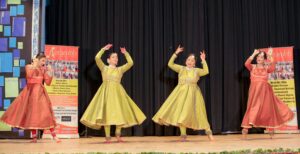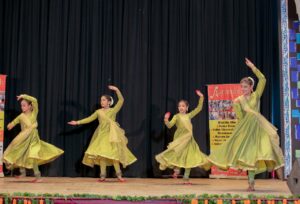
Kathak for beginners starts with four simple things: a steady standing posture, basic footwork called tatkar, graceful hand movements, and counting in Teentaal, a 16-beat rhythm cycle. You do not need any dance background to begin. With two or three classes a week and 15–20 minutes of practice at home, most beginners can perform a short Kathak piece within their first year.
This guide explains what you will learn, month by month, so you know exactly what to expect. At Aarambh Music & Dance Academy in Rohini Sector 8, we have taught Kathak classes in Rohini since 2017, and this is the same path our own beginner batches follow.
What Is Kathak?
Kathak is a classical dance form from North India. Its name comes from katha, meaning story, because Kathak dancers were originally storytellers. Today, it is one of the classical dance forms recognised by the Sangeet Natak Akademi, India’s national academy for music, dance and drama.
A Kathak performance mixes two things. First, there is pure rhythm: fast footwork, spins and patterns that match the beat. Second, there is expression: telling a story through the face, eyes and hands. As a result, Kathak builds both physical skill and confidence. If you want the full story of how the dance grew from temples to royal courts, read our guide to the history of Kathak.
Is Kathak Good for Beginners?
Yes. Kathak is one of the most beginner-friendly classical dance forms because it uses a natural, upright posture. In contrast, some other classical styles ask you to hold a deep half-sitting position from day one. Kathak for beginners therefore feels comfortable for children, teenagers and adults alike.
Still, every classical dance needs patience. Not sure whether Kathak or Bharatanatyam suits you better? Compare them in our guide to the best classical dance form for beginners.
What Will I Learn in the First 3 Months?
In the first three months of Kathak for beginners, you build the foundation. Every later step depends on these basics, so good teachers never rush them.
1. Thaat: the starting posture
Thaat is the standing pose that opens a Kathak piece. You stand tall, relax your shoulders and hold your arms in a graceful curve. It teaches balance and body control.
2. Tatkar: Kathak footwork
Tatkar is the heart of Kathak. You strike the floor with the flat foot and heel to sound out rhythm syllables. The first pattern most students learn is “Ta Thei Thei Tat, Aa Thei Thei Tat”. You practise it slowly first, then at double and four-times speed.
3. Hastak: hand movements
Next, you learn to move your hands and wrists in smooth, clear shapes. These movements later help you tell stories.
4. Padhant: reciting the bols
Kathak dancers speak the rhythm aloud before they dance it. This habit trains your memory and keeps your feet in time.
How Is Kathak Counted? Teentaal Made Simple
Most Kathak is danced to Teentaal, a rhythm cycle of 16 beats split into four groups of four. The first beat is called sam, and it is where most patterns end. Beats 1, 5 and 13 are marked with a clap (tali), while beat 9 is marked with a wave of the hand (khali).
| Section | Beats | Tabla bols | Hand sign |
| 1 | 1–4 | Dha Dhin Dhin Dha | Clap on beat 1 (sam) |
| 2 | 5–8 | Dha Dhin Dhin Dha | Clap on beat 5 |
| 3 | 9–12 | Dha Tin Tin Ta | Wave on beat 9 (khali) |
| 4 | 13–16 | Ta Dhin Dhin Dha | Clap on beat 13 |
Teentaal: the 16-beat cycle every Kathak beginner learns first.
To practise, clap and wave along while saying the bols. Once this feels easy, do your tatkar over it. In fact, one round of “Ta Thei Thei Tat, Aa Thei Thei Tat” fills exactly half a Teentaal cycle.
Kathak for Beginners: Your First-Year Timeline
Every student learns at a different pace. However, this is what a typical first year looks like with two or three classes a week.
| Months | What you learn | Home practice |
| 1–3 | Thaat, basic tatkar at single speed, hastak, clapping Teentaal, reciting bols | 10–15 minutes a day |
| 4–6 | Tatkar at double speed, first slow spins (chakkar), a simple tihai (a pattern repeated three times to land on sam) | 15–20 minutes a day |
| 7–9 | Tatkar at four-times speed, short compositions such as a tukda, simple expressions | 20 minutes a day |
| 10–12 | A short piece from start to finish, stage practice, first exam level if you choose | 20–30 minutes a day |
A realistic first year of Kathak for beginners.
By the end of the year, most students are ready for their first stage performance. At Aarambh, beginners perform at our annual show, Swaranjali. Nervous about the stage? Our guide on how to overcome stage fear in dance will help.
A Tip From Our Kathak Guru, Aman Pandey
“Beginners always want to spin fast. But the dancers who grow quickly are the ones who make their tatkar clean and even at slow speed first. Speed comes on its own.”
— Aman Pandey, Kathak Guru at Aarambh Music & Dance Academy
What Do I Need for My First Kathak Class?
Kathak for beginners needs very little equipment. Bring these to your first class:
- Comfortable clothes: a cotton kurta with churidar or leggings. Tie a dupatta firmly around the waist.
- Bare feet: Kathak is danced without shoes.
- Hair tied back and no jangly jewellery.
- A water bottle and a small towel.
- Ghungroo (ankle bells): not needed on day one. Your guru will tell you when to buy them and how many bells to use.
How Long Does It Take to Learn Kathak?
You can learn the basics of Kathak in about 3–6 months and perform a short piece within a year. Becoming an advanced dancer takes several years of regular training. Many students also take graded exams, which give a clear goal for each year.
At Aarambh, we prepare Kathak students for the graded certificate exams of Prayag Sangeet Samiti. Each level tests practical dance, rhythm knowledge and theory, so you always know what to work on next.
6 Common Mistakes Kathak Beginners Make
- Rushing the speed. Fast but uneven tatkar is harder to fix later.
- Locking the knees. Keep them soft to protect your joints during footwork.
- Looking at the feet. Keep your chin level and eyes forward.
- Skipping padhant. If you cannot say the rhythm, you cannot dance it.
- Practising only in class. Short daily practice beats one long weekly session.
- Forgetting the face. Expression matters from the start. Our guide to improving dance expressions shows you how.
Kathak for Beginners at Aarambh Academy, Rohini
Aarambh Music & Dance Academy runs Kathak for beginners and advanced students in small batches grouped by age and level. Children can start from around age 5, and there is no upper age limit.
| Levels | Beginner to advanced, in small batches grouped by age and level |
| Age | From around 5 years, no upper age limit |
| Styles | Classical Kathak and a semi-classical batch |
| Exams | Prayag Sangeet Samiti certificate levels |
| Stage | Annual show Swaranjali and external events |
| Address | F19/5, 2nd Floor, Rohini Sector 8, near Deepali Chowk, Delhi-110085 |
| Phone | +91-98111 40614 |
Kathak classes at Aarambh Music & Dance Academy, Rohini.
Want to see how a class feels before you join? Book a free demo class and our team will call you within 24 hours, or visit our admissions page to enrol.
Frequently Asked Questions
Can adults learn Kathak from scratch?
Yes. Many of our students start Kathak as adults with no dance background. The upright posture makes it gentle to begin, and adults often progress quickly because they practise with focus.
What is the right age to start Kathak?
Children can usually start Kathak at around 5 years old, once they can follow simple instructions for 30–45 minutes. There is no upper age limit.
Is Kathak hard on the knees?
Not when you learn it correctly. Keep your knees soft, warm up before class, and practise footwork on a wooden or padded floor rather than hard tiles. If you have ongoing knee pain, check with a doctor before continuing.
How many days a week should I practise Kathak?
Attend two or three classes a week and practise at home for 15–20 minutes on most other days. Short, regular practice builds clean footwork faster than long, occasional sessions. For help fitting it around school, read how to balance school and dance practice.
Do beginners need ghungroo?
No, not on the first day. Most teachers introduce ghungroo after the first few weeks, once your tatkar is steady. Your guru will guide you on the right set.
Start Your Kathak Journey
Kathak for beginners is about patience, rhythm and joy. Start with clean footwork, count every beat, and practise a little every day. Within a year, you will move from your first thaat to your first performance on stage. Ready to take the first step? Book your free Kathak demo class at Aarambh Academy, Rohini Sector 8.