
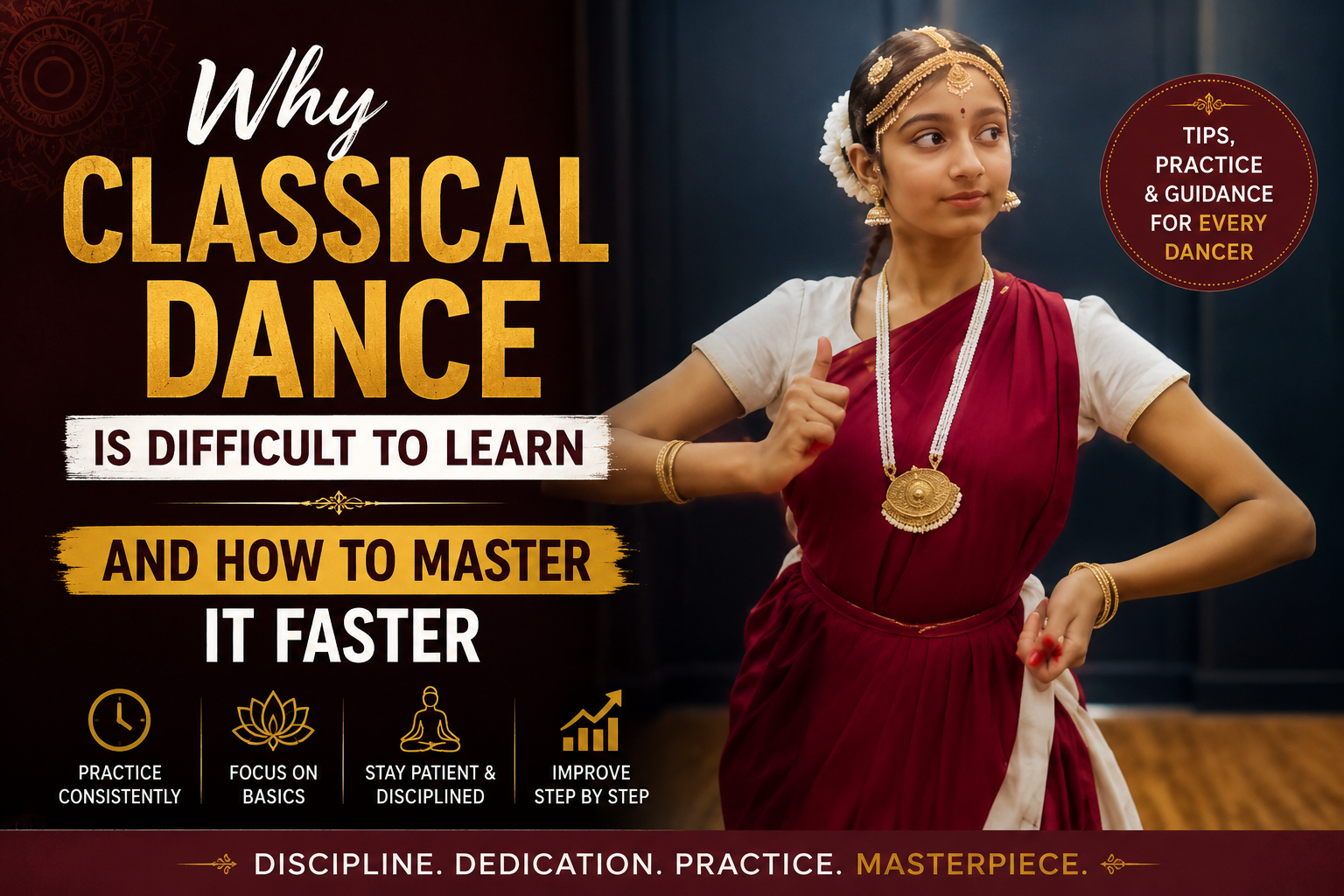
Have you ever felt like classical dance is just too difficult to learn?
Maybe you tried a few steps, got confused with the rhythm, or felt like your body just wasn’t cooperating. You’re not alone—this is one of the most common struggles beginners face when starting their journey in classical dance.
But here’s the truth most people don’t tell you 👉 Classical dance is not difficult—it’s simply disciplined.
Once you understand why it feels hard and how to approach it correctly, everything starts becoming easier, smoother, and even enjoyable.
Let’s break it down step by step.
Is Classical Dance Really Hard to Learn?
The short answer: It feels hard at first, but it gets easier with practice.
Classical dance forms like Kathak, Bharatanatyam are structured. Unlike freestyle dance, you can’t just move randomly—you need:
- Proper technique
- Rhythm understanding
- Body coordination
- Expressions (abhinaya)
👉 This structured approach makes beginners feel overwhelmed initially.
But don’t worry—every professional dancer once struggled at this stage too.
Why Classical Dance Feels Difficult (Real Reasons)
Let’s understand the actual reasons behind the difficulty 👇
1. Complex Footwork and Rhythm
Classical dance is deeply connected to music and beats.
Beginners often struggle because:
- Timing feels confusing
- Footwork requires precision
- Synchronizing with music takes practice
👉 It’s like learning a new language—your brain needs time to adapt.
2. Full Body Coordination
In classical dance, your body doesn’t move randomly.
You need to control:
- Hands (mudras)
- Feet (footwork)
- Eyes (drishti)
- Facial expressions
👉 Doing all this together can feel overwhelming at first.
3. Strong Discipline and Structure
Unlike modern dance, classical dance follows strict rules:
- Fixed postures
- Defined movements
- Traditional techniques
👉 This discipline is what makes it beautiful—but also challenging for beginners.
4. Slow Learning Process
Let’s be honest—classical dance is not something you learn overnight.
- Basics take time
- Perfection takes practice
- Mastery takes years
👉 Many beginners quit because they expect quick results.
5. Physical Strength and Flexibility
Classical dance requires:
- Strong legs
- Good posture
- Body balance
If your body isn’t used to it, it can feel tiring or uncomfortable.
How Long Does It Take to Learn Classical Dance?
This is one of the most searched questions—and here’s the honest answer:
- Basic level: 3–6 months
- Intermediate level: 1–2 years
- Advanced level: 3+ years
👉 But here’s the good part:
You’ll start enjoying and understanding dance within the first few weeks.
How to Master Classical Dance Faster (Proven Tips)
Now comes the most important part 🔥
If you follow these tips, your learning speed will improve dramatically.
1. Practice Consistently (Not Occasionally)
Consistency is everything.
👉 Instead of practicing 3 hours once a week, do:
- 30–60 minutes daily
Daily practice helps your body and mind adapt faster.
2. Focus on Basics First
Most beginners make this mistake:
👉 They jump directly to advanced steps.
But in classical dance:
- Basics = Foundation
- Foundation = Strong performance
👉 The stronger your basics, the faster you’ll improve.
3. Learn One Dance Form at a Time
Trying to learn multiple dance forms together will slow you down.
👉 Choose one:
- Kathak (best for beginners)
- Bharatanatyam
Focus creates faster results.
4. Join a Professional Dance Academy
Learning from YouTube is helpful—but limited.
A good teacher:
- Corrects your mistakes instantly
- Guides your posture
- Improves your technique
👉 This can save you months of struggle.
5. Improve Your Rhythm (Very Important)
Rhythm is the heart of classical dance.
You can improve it by:
- Clapping on beats
- Counting rhythm patterns
- Listening to classical music
👉 Once rhythm improves, everything becomes easier.
6. Watch and Observe Performances
Observation is a powerful learning tool.
Watch:
- Professional dancers
- Stage performances
- Practice videos
👉 Your brain learns faster when you see movements visually.
7. Stay Patient and Trust the Process
This is where most people fail.
👉 They quit too early.
Remember:
- Progress is slow—but real
- Improvement is invisible at first
👉 Stay consistent, and results will come.
How Many Hours Should You Practice?
You don’t need to practice all day.
👉 Ideal practice time:
- Beginners: 30–60 minutes/day
- Intermediate: 1–2 hours/day
👉 Even 30 minutes daily can give amazing results if done properly.
Is Kathak Hard to Learn?
Kathak is actually one of the most beginner-friendly classical dance forms.
Why?
- Natural body movements
- Gradual learning process
- Focus on rhythm and storytelling
👉 Beginners usually find Kathak easier compared to other forms.
Common Mistakes That Slow Down Your Progress
Avoid these mistakes if you want faster results:
❌ Skipping basic steps
❌ Practicing irregularly
❌ Comparing yourself to others
❌ Ignoring rhythm
❌ Losing patience
👉 Fix these, and your improvement will double.
How to Stay Motivated While Learning Dance
Let’s be real—there will be days when you feel stuck.
Here’s how to stay motivated:
- Set small goals (learn 1 step daily)
- Record your practice videos
- Celebrate small progress
- Join group classes
- Remember why you started
👉 Motivation + consistency = success
Benefits of Learning Classical Dance (Why It’s Worth It)
Even if it feels difficult, the rewards are incredible:
- Builds confidence
- Improves focus and discipline
- Enhances physical fitness
- Develops emotional expression
- Connects you with culture
👉 It’s not just dance—it’s personal growth.
Final Thoughts
Classical dance is not difficult—it’s a journey that requires patience, practice, and passion.
Yes, the beginning may feel challenging.
Yes, progress may seem slow.
But once your body and mind start understanding the rhythm, everything changes.
👉 The secret to mastering classical dance faster is simple:
Consistency + Strong Basics + Right Guidance
So don’t overthink it. Don’t wait for the perfect moment.
👉 Start today—and let your journey begin.
FAQs
1. Is classical dance hard to learn?
It may feel difficult in the beginning, but becomes easier with regular practice and guidance.
2. How long does it take to learn Kathak?
You can learn basic Kathak in 3–6 months with consistent practice.
3. How to improve classical dance skills?
Practice daily, focus on basics, improve rhythm, and learn from a trained teacher.
4. How many hours should I practice dance?
30–60 minutes daily is enough for beginners to see progress.
5. Can I learn classical dance at home?
Yes, but joining a dance academy helps you learn faster and correctly.
👉 Ready to improve faster? Join a professional dance class and take your skills to the next level.